🔑 “Just Drive Safe” Is Not a Vehicle Policy


Handing someone the keys to a company truck feels like a small thing. It's not: you're handing over a vehicle you own, insure and are on the hook for, and it may be parked in their driveway every night.
In our last post, we showed how we track every mile and why GPS alone doesn’t cut it. We promised to share the agreement that holds it all together. This is that agreement.
Most property management companies handle the handoff with a quick "drive safe." Usually that's fine, until the day it isn't. That day is when you find out what your vehicle policy actually says, or that you never wrote one.
So let's fix that. Below is what a vehicle agreement is, what it's for, the situations it saves you from, and a free template you can make your own.
👉 Get the free Company Vehicle Policy & Agreement Template
🤔 So what is it, exactly?
A company vehicle agreement is a signed document between your company and anyone who drives a company vehicle. It covers:
- who's allowed to drive
- what the vehicle can and can't be used for
- how miles get tracked
- what happens if there's an accident, a ticket or a warning light
- what has to come back when the keys do
Think of it as a lease for your truck, except the tenant is your maintenance tech and the rent is "please don't let your cousin borrow it."
🎯 What's it for?
It does three jobs:
- It sets expectations before anything goes wrong. Arguing about personal use after the fact is uncomfortable. Pointing to a rule everyone signed is a much shorter conversation.
- It protects the company. Insurance, liability, GPS notice, mileage records: a lot of this works best, or only works, when it's in writing.
- It protects the driver too. Good drivers like knowing the rules. Nobody wants to guess whether stopping for groceries on the way home is fine.
😬 The situations it saves you from
None of these are rare. Ask around at any PM meetup and you'll hear every one:
- The spouse drive. Someone's partner takes the truck "just to the store," gets into a fender-bender, and now everyone's wondering whether insurance covers an unlisted driver. The agreement names who can drive, period.
- The mystery unplug. GPS goes dark for three days, and nobody can say whether that was a dead device or a choice. The agreement says tampering isn't allowed and tells drivers to report a device that stops working.
- The weekend road trip. Tolls show up for a town 200 miles from any property you manage. The agreement spells out personal use and what happens with it.
- The commute argument. Is the drive from home to the first property business mileage or not? Everyone has an opinion. The agreement picks a rule.
- The check engine light that's "been on a while." It's a $200 fix now or a $4,000 one later. The agreement says to report warning lights the same day.
- The ghost fuel card. Someone leaves the company and the card keeps getting swiped. The return inspection checks off every key, card and device.
If you've lived through even one of these, you already know what this document is worth.
📄 What's in the template
It's a 7-page Google Doc. Swap out everything in [brackets] and it's yours:
- Driver and vehicle info: license, emergency contact, VIN, starting odometer, GPS device ID
- Contacts: who to call for accidents, maintenance, and mileage reminders
- 13 short policy sections: assignment, eligibility, mileage, GPS, maintenance, fuel cards, accidents, tickets, smoking, personal property, returns, discipline, updates
- Seven initial-here acknowledgments, so the big rules can't get buried in fine print
- A return inspection checklist with signatures from both sides
🛰️ The GPS part (read this one)
If your vehicles have trackers, tell your drivers in writing. In some states that's required, not just polite. New Jersey requires written notice before an employer tracks a vehicle an employee uses, with fines of $1,000 for a first violation and up to $2,500 for each one after.
Section 4 of the template covers it: what the device records, how you use the data, and a spot to add your state's notice language.
🧾 The mileage part
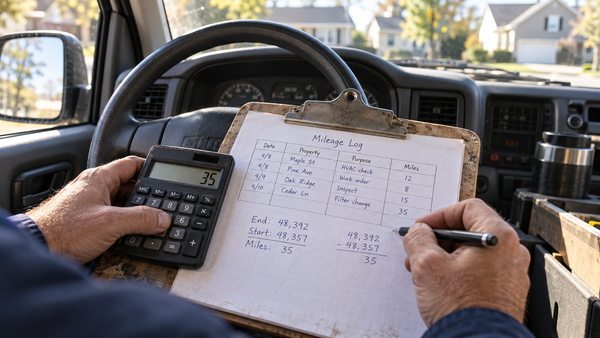
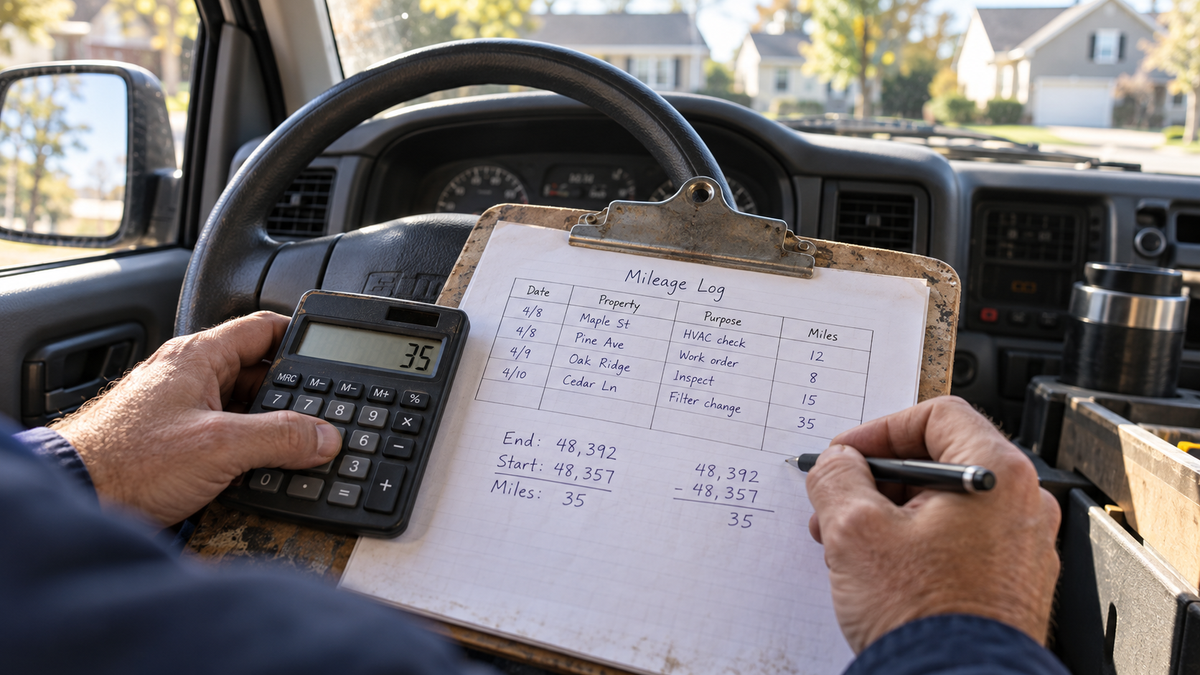
Every trip gets a date, the miles, the property and the reason. That's what the IRS has long expected, a log of miles, destination and business purpose, and it's also how you bill trips back to the right property. For commuting, pick Option A, B or C in Section 3 and stop having that argument. Under IRS rules, the drive from home to work is generally personal mileage, so your policy sets how you handle it internally and your accountant decides how it’s reported.
🧭 Make it fit how you run
- 🏡 You hire out most maintenance: your vehicle is probably a shared car for showings and inspections. Name every driver and do a return check at every handoff.
- 🔧 You have an in-house maintenance team: use the whole thing. The maintenance kit, warning-light and repair approval rules were written for techs who are out all day.
- 🔑 Agents drive their own cars: this template is for company vehicles. Personal cars need a reimbursement policy instead, though the mileage section is a good place to start one.
⚖️ Quick but important
This is a template, not legal advice. GPS notice, monitoring, reimbursement and paycheck deduction rules vary by state, and sometimes by city.
Before anyone signs it, have an employment attorney in your state look it over and check with your insurance agent. Anywhere you see "[where permitted by law]," that's your cue.
💬 Your turn
How does your team hand off vehicles today? Reply with your letter:
- A) Keys and a "drive safe"
- B) A signed policy that's been in a drawer since who-knows-when
- C) A full agreement with GPS and mileage rules
- D) No company vehicles. Everyone drives their own car.
Bonus points for your best vehicle story. Names changed to protect the guilty. 😄
If you want help adapting this template, or want early access to the mileage app we built, Property Manager Assistant clients get it first, reach out to Greg or email your VA Team Lead.
✅ This week
- Make a copy of the template and fill in the brackets.
- List every company vehicle and everyone who drives it.
- Book 30 minutes with your employment attorney.
📚 Read More:
 Regine Collins
 Regine Collins

 Regine Collins

 Regine Collins

🔗 Check Out Our Industry Partners ✅
| Share with your network |
PM Monthly Forecast
Operational insights for property management companies.
Follow Property Manager Assistant:
YouTube •
LinkedIn •
Facebook •
Instagram
© pmadvisor.ai
Need help implementing these new SOPs into your company? Talk to us about Virtual Assistant Services specifically designed for Property Management Companies.