❓The $542 Question We Should Have Asked Sooner

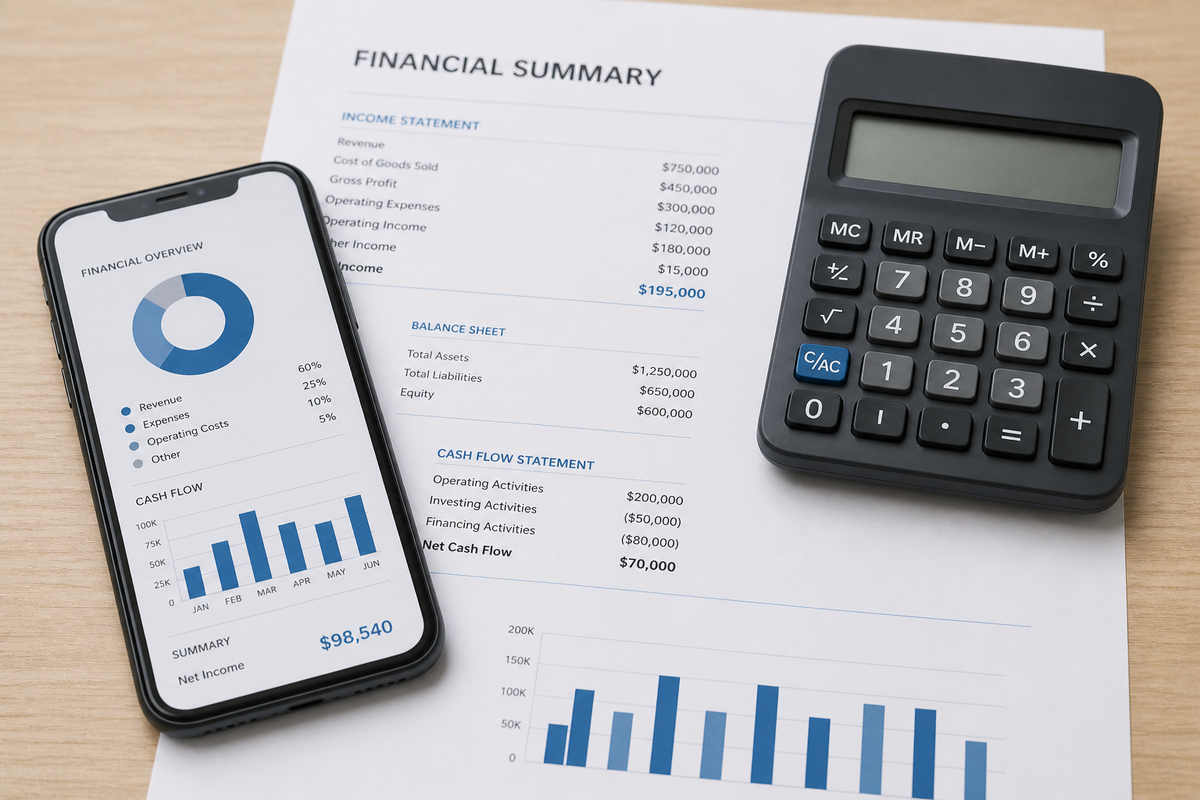
When was the last time you actually looked at your phone bill?
Not glanced. Not approved on autopay. Looked at it — line by line, who has what, what's still active, what you're paying for, what you're getting.
We did. We found enough to switch carriers, kill three lines we didn't realize were still active, and project around 67% in monthly savings once everything settles.
Here's what the exercise actually looked like.
📉 What We Were Paying
Our previous carrier was billing us $542.70/month for our local phone lines (our remote team uses VoIP).
That covered:
- 8 phone lines across the team and offices
- 2 office internet gateways
- 1 fax line
- Various equipment leases bundled in
Annualized, that's ~$6,512/year just to keep everyone connected.
Sounds reasonable on paper. Then we started looking at the lines.
🔍 What We Found Before We Even Switched
Three things jumped out the moment we audited the active line list:
One internet gateway hadn't been used in three months. Just billing $43/month for the privilege of existing.
Two phone lines were still active for people no longer with the company. Cancelled "months ago" — except they weren't.
One line had no business reason to still be paid for at all. The role it supported had ended; the line kept billing.
None of this was bad-faith. It's just what happens when the bill becomes routine. Autopay is silent. The bill becomes background noise. Six months go by and you're paying for ghosts.
Just cleaning up the active line list — before any switch — would have saved us a meaningful number every month.
📊 Industry Insight (We're Not The Outlier — You Probably Are Too)
If you think we're the exception, the data says otherwise. This kind of waste is the norm:
- 87% of businesses overpay on telecom by an average of 31%, and nearly 80% of telecom invoices contain discrepancies — including phantom lines, third-party charges, and services that were "disconnected" years ago but still appear on the bill.
- According to Gartner data cited by CMS360, communication services account for 43% of the global IT budget — and businesses routinely overspend by up to 15% on telecom costs alone, often without realizing it.
- Multi-location businesses overspend on telecom by 30% or more, often from missed billing errors, duplicate services across sites, and a lack of central oversight.
So no, we're not the only operation finding this stuff. We're just one of the few that decided to actually look.
🗺️ The Research (This Is Where The VA Earned Her Keep)
We didn't just go to a competitor and ask for a quote. We had our VA build a full comparison spreadsheet of every major carrier servicing our coverage area.
What got tracked:
- Coverage rating in our specific markets (rural reach matters when half your team is in the field)
- Estimated monthly cost per line
- Internet bundle pricing
- Hotspot data allowances
- Promotional pricing vs. post-promo pricing
- Contract length and lock-in terms
- Direct sales contact info for follow-up
15 providers. One spreadsheet. Two evenings of work — none of which we would have had time to do ourselves between everything else on the plate.
That spreadsheet is also what made the next part possible.
💬 The Negotiation Was Not What We Expected
Here's what nobody tells you about switching carriers:
The price you see on the website isn't the price you actually get quoted in person. And the price you get quoted in person isn't the price you can actually negotiate to if you push.
The advertised promo online showed one rate. The first in-person quote came in higher, with a "drops to a much higher rate after 2 years" structure that almost killed the deal. We pushed back. We pulled up the spreadsheet. We showed them the comparable pricing from two other carriers we'd researched.
The deal that came back included:
- Lower per-line pricing for the promotional period
- A buyout reimbursement (via gift card) for our outstanding device balances on the old carrier
- Office internet bundled into the plan
None of that was on the original quote. All of it came out of having the data ready.
🧮 The Math
Here's how the projected savings actually break down.
Old carrier: $542.70/month → $6,512/year
New carrier (projected, post-transition):
- 8 lines at promo pricing: ~$120/month
- Bundled office internet: ~$40–60/month
- Total: ~$160–180/month → ~$1,920–2,160/year
That's a 67–70% reduction in our monthly telecom spend. Roughly $4,400–4,600/year back in operating margin.
⚠️ The Honest Part — We're Not Saving That Yet
Three things you should know before you go celebrating:
The current month is uglier than the projection. We're still paying our old carrier roughly the same amount we always did, because porting lines out doesn't immediately stop equipment charges or close out active gateways. The savings settle over time, not the day you switch.
Device payoff is a real cost. We had to pay off ~$637 in remaining device balances on the lines we ported. The new carrier reimbursed it via gift card, but that takes time to actually arrive.
Promotional pricing has an expiration date. Our promo rate is locked for 24 months. After that, it could nearly double. We've already calendared the renewal date so we don't drift into a worse deal by accident.
So the honest framing isn't "we saved 67% last month." It's "we're projected to save 67% over a clean 12-month window once the transition fully settles, and we know exactly when to renegotiate to keep it."
💼 Why This Matters For Owners
If you own properties and your management company is operating any kind of communications stack — office phones, on-call lines, internet at the office or your buildings — the same exercise applies to them.
Has anyone audited the active line list in the last year?
Has anyone compared current pricing against the market?
Has anyone caught the equipment charges still trailing on lines that were "cancelled"?
Telecom waste is one of those costs that hides in plain sight. It looks reasonable as a single line item every month. It's only when you actually pull it apart that you realize how much margin is sitting in there.
🧭 The Real Lesson
The carrier we picked isn't the lesson. Your market will have different providers, different promos, different coverage tradeoffs. What works in our region may not work in yours.
The lesson is the initiative.
Most companies running on autopay don't do this exercise once a year. Most don't do it once every three years. The bill becomes wallpaper, the team that set it up moves on, and the spend just keeps spending.
We almost didn't do it either. It took someone on the team raising a hand and asking "is this actually still the right deal for us?" — and then doing the legwork to find out.
That's the part worth copying. Not the carrier. The willingness to actually look.
💬 We'd Love Your Input
When was the last time you audited your own telecom spend?
- Do you know exactly which lines and devices are still active on your account?
- Are you still on the deal you signed up for, or did promotional pricing roll off without anyone noticing?
- Have you compared your current bill against the market in the last 12 months?
Hit reply and let us know what you find when you actually look. We're betting most operators have at least one ghost line.
🔗 Check Out Our Industry Partners ✅
| Share with your network |
PMA Monthly Forecast
Operational insights for property management companies.
Follow Property Manager Assistant:
YouTube •
LinkedIn •
Facebook •
Instagram
© PropertyManagerAssistant.com
Need help implementing these new SOPs into your company? Talk to us about Virtual Assistant Services specifically designed for Property Management Companies.
The content of this newsletter is for informational purposes only and does not constitute professional advice. Property Management Assistant may have consulting agreements with, or financial interests in, companies mentioned in this newsletter. Additionally, some of the links included in this newsletter are affiliate links, meaning Property Management Assistant may earn a commission if you make a purchase through these links. Always perform your own due diligence before making any financial or business decisions.


