💡 How Energy Audits Reduce Operating Costs for Property Owners (And Why We're Doing It on Our Own Properties)

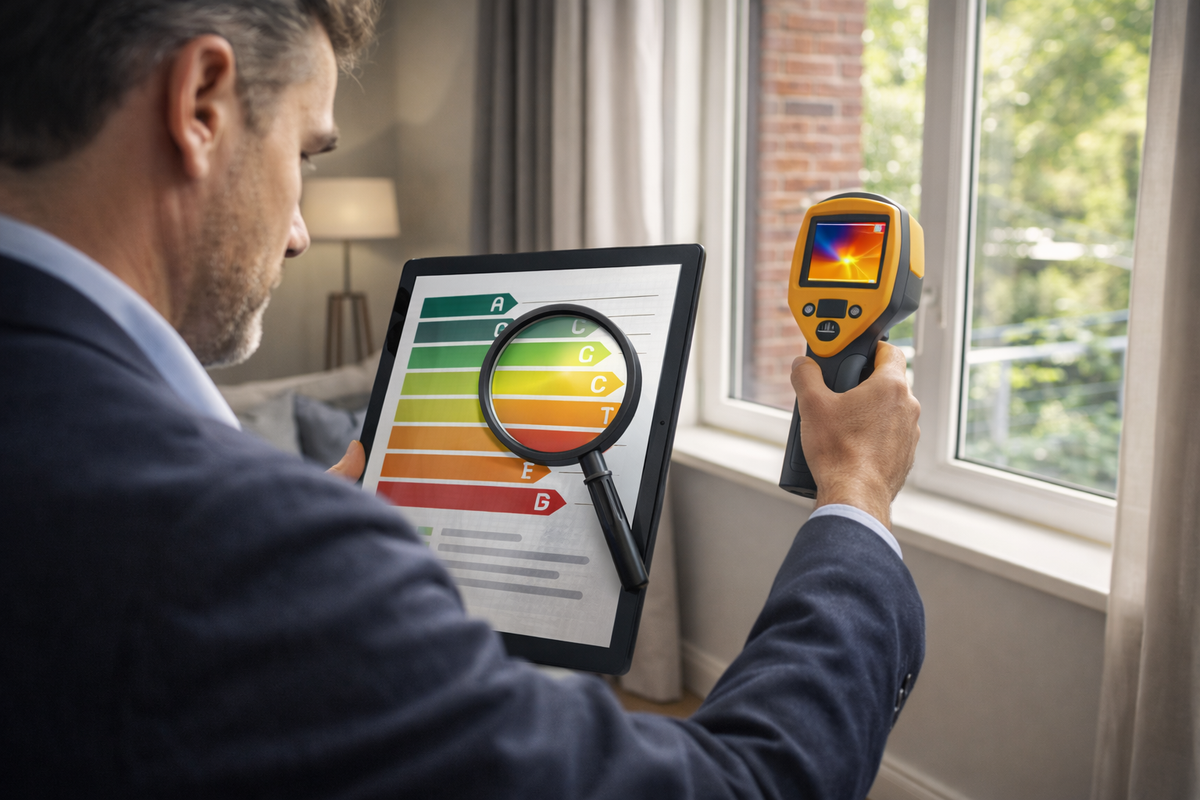
Most property owners never think about an energy audit until a utility bill forces the conversation. We decided to be proactive — and what we found surprised us.
We recently had energy audits completed on several of our own properties in Wisconsin. Not because something was broken. Not because a tenant complained about their heating bill. But because after 15 years in property management, we've learned that the costs you don't see are often the ones that quietly kill your NOI.
The results were eye-opening.
One property was running at 8.8 air changes per hour — meaning the entire volume of air inside the building was being replaced with outside air almost nine times every hour. Another was at 18.6 air changes per hour. For context, a well-sealed modern home should be around 3-5. That's not a minor inefficiency. That's money leaking out through every gap, crack, and unsealed joint — every single hour of every single day.
Here's what we learned, what we're doing about it, and why every property owner should consider doing the same.
What Is an Energy Audit?
An energy audit is a professional evaluation of how efficiently a building uses energy. A certified home energy auditor walks through the property, runs a blower door test to measure air infiltration, evaluates insulation, checks combustion equipment for carbon monoxide and draft issues, and identifies where energy is being lost.
The blower door test is the most revealing part. It depressurizes the building and measures exactly how much air is leaking in and out — giving you a number you can actually act on instead of guessing.
The auditor then provides a written report with specific findings and recommendations prioritized by impact.
What We Found in Our Properties
Across three properties, the most common issues were:
Air leakage through the building shell — Gaps around top plates, window and door frames, plumbing penetrations, and chimney openings. Air you're paying to heat is escaping constantly.
Inadequate or disturbed attic insulation — Insulation that's been moved, compressed, or never brought up to current standards. Most recommendations called for blown cellulose to reach R-50 — the current benchmark for energy efficiency in Wisconsin climates.
Unsealed ductwork — Exposed ductwork in attic spaces with unsealed joints losing conditioned air before it ever reaches the living space. Sealing with mastic and wrapping with insulation can dramatically reduce heating and cooling losses.
Recessed lights and attic access points — Small gaps that seem insignificant but create major infiltration points, especially during Wisconsin winters.
None of these were catastrophic discoveries. But combined? They represented significant ongoing energy loss — and ongoing operating cost — that could be addressed with targeted improvements.
The ROI Case for Property Owners
Energy improvements don't just reduce utility bills — they:
Reduce tenant complaints. Cold drafts, uneven heating, and high utility costs are among the top reasons tenants don't renew. A tighter, more efficient building means fewer maintenance calls and higher retention.
Protect the building envelope. Air leakage that allows warm moist air into attic spaces causes condensation — which leads to mold, rot, and deteriorating roof sheathing. Fixing air sealing now prevents far more expensive structural repairs later.
Increase property value. Energy efficiency is increasingly a factor in property valuation and tenant decision-making.
Lower operating costs. Whether utilities are owner-paid or tenant-paid, a more efficient building costs less to operate. For owners covering common area utilities or multi-family properties, the savings go directly to the bottom line.
The cost of a professional energy audit typically runs $300-$500 depending on building size and location. The payback period on most air sealing and insulation work is 3-7 years, with energy savings continuing for the life of the building.
Check Your State for Rebates and Incentive Programs
This is the part most property owners completely miss — and it's where real money is available. Before spending a dollar on improvements, check what your state, utility company, and federal programs will cover.
⚠️ Important federal update: The federal Section 25C Energy Efficient Home Improvement Tax Credit expired December 31, 2025. If you completed qualifying work in 2025, consult your tax advisor about claiming those credits. No extension has been enacted as of April 2026. Keep watching — this may change.
Wisconsin-specific programs (still active and funded):
- Focus on Energy — Wisconsin's statewide program offers rebates for insulation, air sealing, smart thermostats, heating and cooling equipment, and more. Multifamily property owners have dedicated programs. Rebates increased 20-30% for 2026.
- IRA Home Energy Rebates (HOMES & HEAR) — Wisconsin received $149 million under the Inflation Reduction Act for home energy rebates. Focus on Energy administers both programs. Income-qualified households can receive up to $8,000. Available to multifamily property owners — contact an Energy Advisor to participate.
- Verify your utility at focusonenergy.com/about/participating-utilities to confirm you're eligible.
- Xcel Energy and We Energies customers may have additional utility-specific rebates on top of Focus on Energy programs. Check directly with your utility provider.
If you operate outside Wisconsin:
- DSIRE — Database of State Incentives for Renewables & Efficiency — the most comprehensive resource for energy incentives in every state. Search by state, technology type, and property type to find every available program.
- Search "[your state] energy efficiency rebates rental property 2026" and check with your local utility directly. Many programs aren't widely advertised.
For all property owners:
- Energy Star Home Performance Assessment — Find a certified auditor in your area and understand what a proper assessment covers.
The bottom line: between state rebate programs and IRA-funded incentives, you may be able to cover 30-50% of improvement costs depending on your income eligibility and property type. The audit itself may also be partially reimbursed through utility programs.
What We're Doing Next
Based on our audit results, we're prioritizing:
- Air sealing top plates and penetrations across all three properties
- Blown cellulose insulation to reach R-50 in attic spaces
- Mastic sealing and insulation wrap on exposed ductwork
- Weather stripping replacement on identified doors and access points
We're treating this as a capital improvement investment — documented, phased, and tracked against energy cost reduction over time.
Should You Get an Energy Audit on Your Properties?
If you've never had one done — yes. Especially if your properties are more than 15-20 years old, located in a heating-dominated climate, or if you're covering any utility costs as an owner.
The audit itself is low cost. The information it gives you is invaluable. And between available rebates and the long-term reduction in operating costs, the math almost always works in your favor.
If you're a client of ours and want to explore whether an energy audit makes sense for your property, reach out. This is exactly the kind of proactive management that protects your asset value over the long term.
Have you had an energy audit done on your properties? What did you find? Drop it in the comments — we'd love to compare notes.
🙋 Let Our VAs Handle It
Interested in getting energy audits arranged for your properties? Our VAs can handle the entire process — finding certified auditors, collecting quotes, tracking rebates, and reporting results to your owners.
📞 Let's Talk About It →No commitment. Just a conversation.
Utility Profit • Credhub • StackTracker • PropertyManagerAssistant
PMA Monthly Forecast
Operational insights for property management companies.
Follow Property Manager Assistant:
YouTube •
LinkedIn •
Facebook •
Instagram
© PropertyManagerAssistant.com
Need help implementing these new SOPs into your company? Talk to us about Virtual Assistant Services specifically designed for Property Management Companies.
The content of this newsletter is for informational purposes only and does not constitute professional advice. Property Management Assistant may have consulting agreements with, or financial interests in, companies mentioned in this newsletter. Additionally, some of the links included in this newsletter are affiliate links, meaning Property Management Assistant may earn a commission if you make a purchase through these links. Always perform your own due diligence before making any financial or business decisions.


