☀️ July: Raising Rent Is Lazy. Here's What We Do Instead.


Every month I share what's actually on our plate — not the polished version, the real one. If something we're doing helps you run a tighter operation, steal it. That's the point.
We're halfway through the year, the books are open on my desk, and the annual insurance report is sitting in the tab next to them. So I'm doing the thing most operators put off until something forces it — going line by line through where our owners' money actually comes from, and where we've quietly been leaving it on the table.
Here's the theme I keep coming back to this month, because almost everything we're working on ties to it: our job isn't just to manage an owner's property. It's to find them money they didn't know was sitting there. Not by jacking up rent. By building revenue lines into the operation that make the resident's life better and the owner's statement bigger at the same time. That's the difference between a company that collects a management fee and one that earns it.
This month that meant a closer look at a revenue line we've quietly run for years, the software pilot going live — and me being straight with you about where it's already tripping up. Plus a couple of smaller moves worth a mention.
🐾 The $0 Revenue Line Most Owners Are Giving Away
None of this is new for us. For more than two years now, every applicant has run through a third-party pet screening platform — and in that time our owners have collected more pet rent and ended up with better tenants because of it. That's not a small thing: PetScreening's 2026 report found its clients saw pet-related revenue jump 30.7% after putting real screening in place.
The easy version of this job is to do nothing — let the surprise pets slide, let the owner eat the damage at move-out, collect the same flat fee from everyone and call it handled. That's not us. We vet every pet, price by the risk the animal actually carries, and send those fees to the owner whose asset absorbs the hit. Owners get paid for a risk they were already carrying for free, the unauthorized pets get caught before they're a claim instead of after, and pet-friendly units fill faster from a bigger pool. A quiet liability, turned into a line on the right side of the ledger.
🛡️ A New Renters Insurance Vendor at Move-In
Nothing dramatic — same setup we've always run, just a different vendor behind it. It's built into the move-in workflow: a resident who doesn't already have renters insurance has to get a policy through our system before move-in, and the moment they show proof of their own, we switch it off. No chasing, no manual reminders — the workflow handles it. It protects the resident's belongings and closes the gap that otherwise lands on the owner when an uninsured tenant has a pipe burst or a kitchen fire. Small, automatic, and exactly the kind of thing that belongs in a resident benefit package.
Building the package in the first place is the part most operators stall on. The natural next step is the full teardown — the anatomy of a tenant benefit package: every line, what belongs and what's padding, how to price it so the value obviously beats the fee. That's a breakdown worth doing, and one I'll get to in a future issue. If you've ever stared at a package wondering which parts actually earn their keep, keep an eye out.
The credit-building piece of our package runs through CredHub, and the short version is that our PMA clients get better terms on it through us than they'd get walking in alone — the kind of pricing that comes from running real volume. I'm not laying the whole structure out here; I'm putting up a full breakdown right here on PMForecast later this week — how it works and how to plug it into your own package. If you're a PMA client and don't want to wait, 📞 book a call with Greg or reach out to your VA team lead.
🖥️ The Software Pilot Goes Live
Last month I flagged July as the month the new platform stops being a sandbox and starts touching real money. It's here. The 50-unit pilot is live — real rent, real tenants, real workflows, on a contained slice of the portfolio so we catch problems while they're small.
I'm still not naming the platform until we're 30 days in with real operational data. Recommending software you loved for two weeks is how you lose people's trust. But here's the part worth stealing if you're staring down a migration yourself: not every line item costs more on the new system — some cost less, and that's only obvious if you go in testing every inch before you commit instead of doing a hard cutover and praying. Audit the line, make the vendor earn the rate, don't assume the number you set two years ago is still right.
And because I promised to share the real experience — the good and the bad — here's the bad. The data and document side of this migration hasn't gone the way I was told it would. I was assured this part would be hands-on: that carrying our documents over and getting everything set up would be handled for us. So far that's not how it's playing out, and I'll be straight with you, I was turned off by it. I've got a call with them this week to sort out exactly what's covered and what isn't, and I'll tell you how it lands. This is also the entire reason we started with 50 units instead of the whole portfolio. If a vendor is going to fall short on what they promised, I want to find that out on a contained slice I can manage — not on the full book mid-rent-collection. Test small. It's the cheapest insurance there is, and right now I'm very glad we bought it.
Talk To Us
We're documenting everything in real time and would love your intel:
- 🛡️ What do you do when a resident signs with no renters insurance? Require it, suggest a vendor, or let it ride?
- 🐾 How do you handle pet screening and ESA documentation? What's caught you out?
- 🧪 Mid-migration like us? What surprised you that the demos never showed?
Fifteen years in this business taught me the best advice never comes from a sales rep. Reply to this email or drop it in the comments.
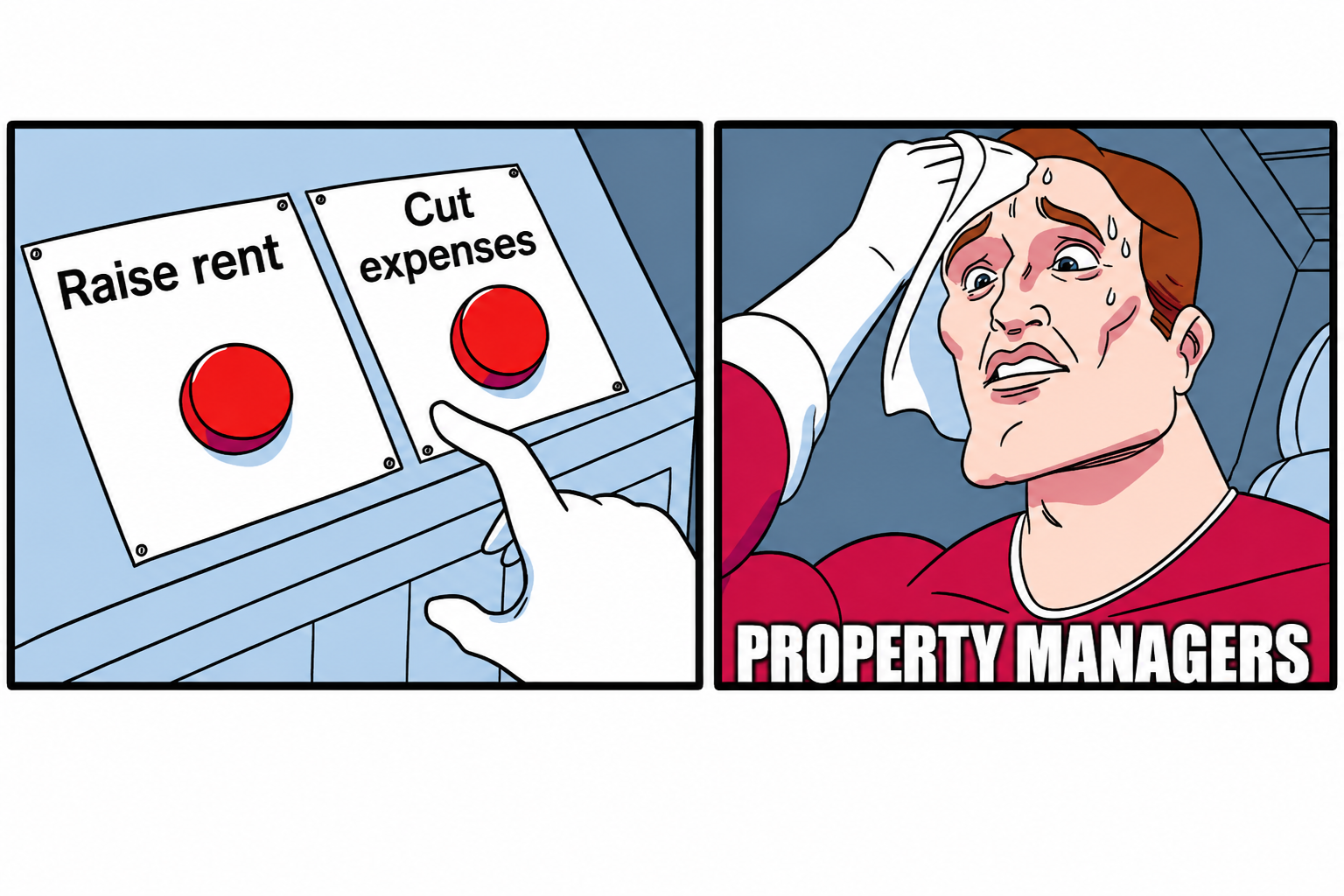
💡 Growth Tactic: Audit One Revenue Line Per Month
You don't find owner revenue in a strategy offsite. You find it one line item at a time.
Pick one a month. Pet policy in July. Resident insurance in August. Late-fee and NSF structure in September. Application and admin fees in October. For each one, ask the same three questions:
- Are we charging for the risk and the work we're actually taking on?
- Is the resident getting something real in return?
- When did we last check the rate?
Most operators have three or four revenue lines they set up years ago and have never revisited. The money's already there. It just needs someone to go look.
The honest part: this is exactly the kind of recurring, unglamorous work that never feels urgent and never gets done — which is why a trained VA who already understands PM workflows is built for it. Ours run the audits, flag the gaps, and tee up the decisions. Boring. Effective. The owners feel it on every statement.
📰 Industry Pulse
🐾 HUD just rewrote the ESA rules — On May 22 HUD rescinded its 2020 emotional-support-animal guidance and shifted to the ADA's trained-service-animal standard, effective immediately. Federal enforcement no longer presumes you must waive fees or accommodate an untrained ESA — but private lawsuits and state laws (Wisconsin included) still apply, so talk to your attorney before you touch your policy. NAA's breakdown.
🤖 AI just got a direct line into PM software — At its May conference, Rentvine became the first single-family PM platform to adopt the Model Context Protocol (MCP) — the standard that lets tools like Claude and ChatGPT connect securely to your live property data instead of sitting in a separate tab — plus an AI agent layer called Pro Skills. Whatever stack you run, this is the direction the whole category is heading. The announcement.
⚖️ The FTC is done warning about hidden fees — December's $24M Greystar settlement and a federal rental-fee rulemaking already in motion mean one thing: every mandatory charge, including your benefit package, gets disclosed in the all-in advertised price. Build the revenue, but show the number. FTC release.
🛡️ Rent reporting demand keeps climbing while supply backs away — TransUnion's latest data shows 57% of renters prefer a manager who reports rent and nearly 80% say it would make them pay on time, yet only about 13% have it. The operators who build it now own the gap. TransUnion research.
📚 Must-Reads From This Month
 PM Monthly Forecast
 PM Monthly Forecast
 PM Monthly Forecast
 PM Monthly Forecast
📅 Events Worth Your Time
🎷 NAA Apartmentalize — June 17–19 📍 New Orleans, LA — The biggest room in the industry, and we'll be there. We did a ton of homework on partnerships before this one, so if you're walking the floor, come find us — I'd love to talk shop.
⚖️ NAA Rental Housing Advocacy & Legal Summit (RHALS) — August 4–6 📍 Nashville, TN — Worth a look if fee disclosure and rental-law changes are on your radar this year. They should be.
🏢 NARPM Chapter Meetings — Check your local chapter's July calendar — the summer sessions are where the operational intel actually gets traded.
🔗 Check Out Our Industry Partners ✅
| Share with your network |
PMA Monthly Forecast
Operational insights for property management companies.
Follow Property Manager Assistant:
YouTube •
LinkedIn •
Facebook •
Instagram
© PropertyManagerAssistant.com
Need help implementing these new SOPs into your company? Talk to us about Virtual Assistant Services specifically designed for Property Management Companies.
The content of this newsletter is for informational purposes only and does not constitute professional advice. Property Management Assistant may have consulting agreements with, or financial interests in, companies mentioned in this newsletter. Additionally, some of the links included in this newsletter are affiliate links, meaning Property Management Assistant may earn a commission if you make a purchase through these links. Always perform your own due diligence before making any financial or business decisions.


